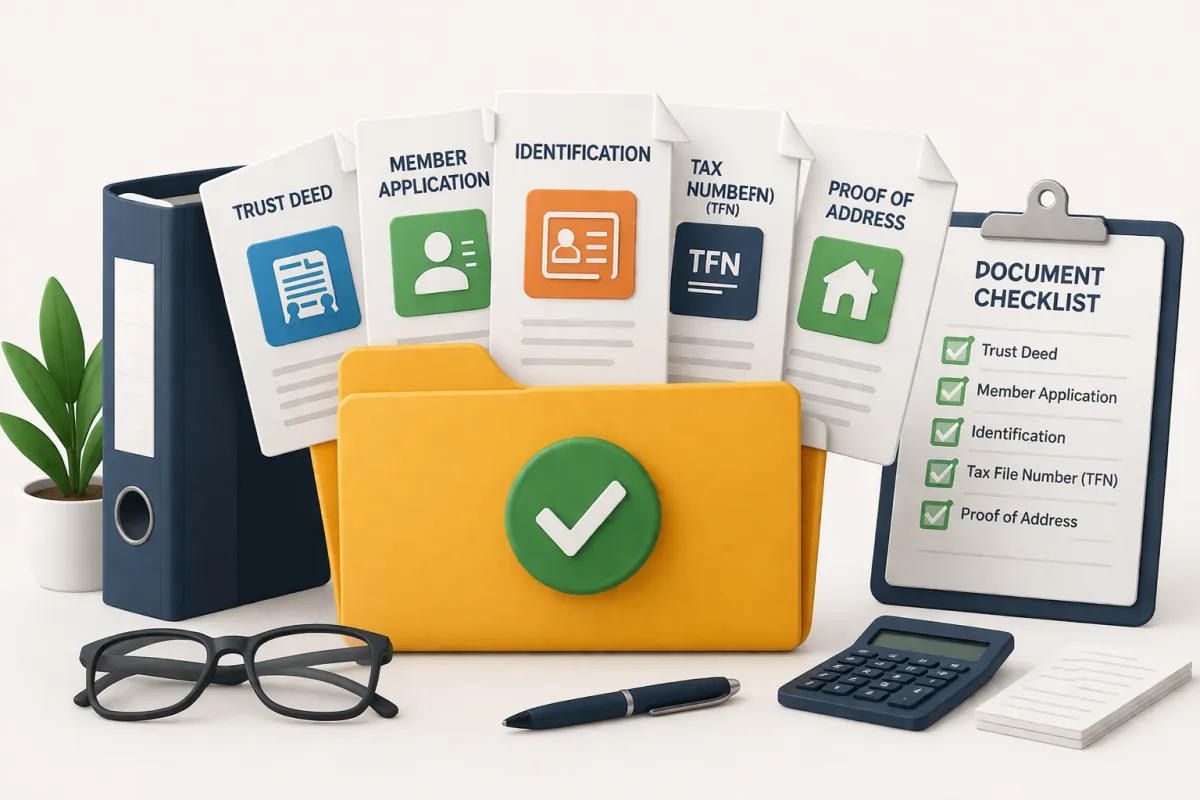
What documents are required to set up an SMSF?
Setting up an SMSF involves more than just opening an account.
At its core, an SMSF is a legal structure. And like any structure, it relies on the right documentation from the beginning.
This is where things matter more than most people expect.
If the documentation isn’t set up properly, it can create issues later, whether that’s during registration, when moving funds, or down the track during an audit.
This guide walks you through the key documents involved, and what you need to have in place.
Why documentation matters
Before going through the list, it’s worth understanding why this is important.
An SMSF operates under superannuation law.
That means the fund needs to be properly established, documented, and maintained from the start.
If something is missing or incorrect, it can lead to:
compliance issues
delays in registration
problems with rollovers or contributions
Most of these issues are avoidable when things are set up properly from the beginning.
What documents do you actually need?
Let’s walk through the key ones.
1. Trust deed
This is the foundation of your SMSF.
The trust deed is the legal document that:
establishes the fund
sets out how it operates
defines what the trustees can and cannot do
Without a valid trust deed, the SMSF can’t operate.
2. Trustee consent forms
Each trustee, or director of a corporate trustee, needs to provide written consent.
This confirms that you:
agree to take on the role
understand what comes with it
3. Trustee declaration
This is a requirement.
Each trustee must sign a declaration confirming that they understand their legal responsibilities.
This needs to be completed within a specific timeframe after being appointed.
4. Identification documents
You’ll also need to provide identification.
This is used for:
ATO registration
bank account setup
verification processes
This usually includes standard ID such as a passport or driver licence.
5. Corporate trustee documents (if applicable)
If you’re using a corporate trustee, there are a few additional documents involved.
This may include:
company registration details
company constitution
director consent forms
The company acts as the trustee of the SMSF.
6. ATO registration details
To register your SMSF, information needs to be submitted to the ATO.
This includes:
the fund structure
trustee details
contact information
Once processed, the SMSF is issued:
an ABN
a TFN
7. SMSF bank account setup documents
Your SMSF needs its own bank account.
To open this, the bank will usually ask for:
the trust deed
trustee identification
ABN and TFN details
This account is where all fund transactions take place.
8. Investment strategy document
Before making any investments, your SMSF needs an investment strategy.
This should reflect how you plan to manage the fund.
It needs to consider:
risk and return
diversification
liquidity
your retirement objectives
This is not just a document to complete. It should guide how the fund operates.
9. Minutes and resolutions
Your SMSF also needs to document its decisions.
At setup, this can include:
appointing trustees
accepting roles
adopting the trust deed
Record-keeping doesn’t stop here. It continues throughout the life of the fund.
10. Electronic Service Address (ESA)
If your SMSF is going to receive contributions or rollovers electronically, you’ll need an ESA.
This allows the fund to operate within the superannuation system.
What about additional documents?
Depending on how your SMSF is used, you may need additional documents later on.
For example:
a holding (bare) trust deed if you are buying property with borrowing
loan agreements for borrowing arrangements
lease agreements for commercial property
These usually come into play as the fund becomes more active.
Your responsibilities around documentation
As a trustee, you are responsible for keeping everything in order.
This includes:
keeping documents accurate and up to date
maintaining records over time
retaining documents for required periods
Even if someone helps you with this, the responsibility still sits with you.
Where things usually go wrong
This is where we often see issues.
For example:
outdated or incorrect trust deeds
missing trustee declarations
incomplete records
mixing personal and SMSF documents
registering the fund before everything is finalised
These might seem small at the time, but they can create complications later.
Why getting this right matters
Documentation is one of the foundations of a compliant SMSF.
It’s also an area that regulators continue to review closely.
This includes:
whether trustees understand their obligations
how records are maintained
whether transactions are properly supported
Getting this right from the beginning makes everything else easier.
How we can help
We focus on SMSF setup and compliance.
This includes:
preparing compliant SMSF documentation
structuring the fund correctly from the start
meeting ATO requirements
supporting ongoing record-keeping and reporting
If you’d like to understand what’s required to set up an SMSF properly, you can speak with our team.

We are a specialised accounting firm focused on SMSF, with over 20 years of experience working with investors. We have supported 300+ SMSF setups.
Our work focuses on structure and compliance, particularly for property and LRBA arrangements.
If you’re thinking about using your super for property, it’s worth understanding how this applies to your situation.[Book a Free Consultation]
Disclaimer
Real Accounting does not hold an Australian Financial Services Licence (AFSL) and does not provide financial product advice. This article contains general information only and does not take into account your objectives, financial situation, or needs. Before establishing an SMSF or implementing any borrowing arrangement, you may wish to seek advice from a licensed financial adviser to assess whether it is appropriate for your circumstances.